Boost Dell Laptop Performance with External GPU
Adding an external GPU to your Dell laptop can significantly enhance its performance, especially when it comes to graphics-intensive tasks such as gaming and video editing. By connecting a compatible external GPU to your Dell laptop, you can enjoy better graphics capabilities and improved productivity. In this article, we will explore the benefits of using an external GPU with a Dell laptop and discover the best options available.
Key Takeaways:
- External GPU can greatly enhance Dell laptop’s graphics performance
- Improved gaming experience and smoother gameplay
- Ability to handle graphics-intensive tasks effectively
- Flexibility to switch between portable and powerful setup
- Potential for future developments in external GPU technology
What is an External GPU?
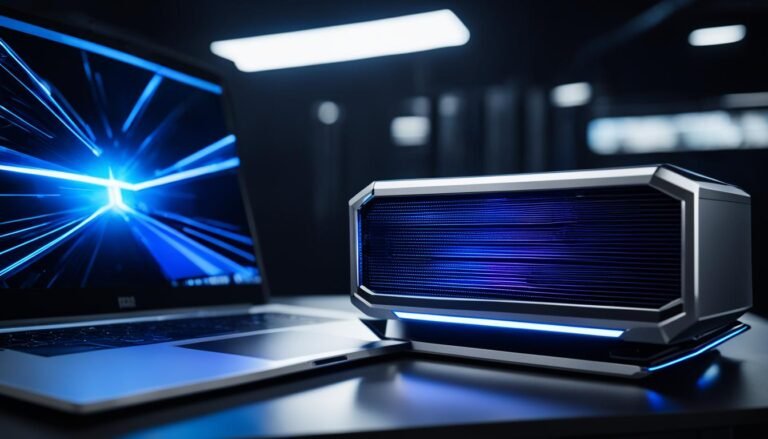
An external GPU, also known as an eGPU, is an external graphics processing unit that can be connected to a laptop or desktop computer to enhance its graphics performance. It is an ideal solution for laptops, especially those with integrated or lower-powered graphics cards, as it allows users to upgrade their graphics capabilities without having to buy a new laptop.
Using an external GPU with a Dell laptop can provide a significant boost in graphics capabilities, enabling users to run demanding applications, play high-end games, and perform graphics-intensive tasks with ease.
With an external GPU, Dell laptop users can enjoy:
- Improved graphics performance for gaming, video editing, and other graphics-intensive tasks
- The flexibility to upgrade graphics capabilities without replacing the entire laptop
- A portable and powerful setup, depending on their needs
By connecting an external GPU to their Dell laptop, users can take their graphics performance to new heights and unlock the full potential of their device.
The Benefits of Using an External GPU with a Dell Laptop
| Benefits | Description |
|---|---|
| Better Graphics Performance | An external GPU enhances the laptop’s graphics capabilities, enabling smoother gameplay, higher frame rates, and better graphics quality for games and graphic-intensive tasks. |
| Upgrade Flexibility | With an external GPU, users can easily upgrade their graphics capabilities without having to replace the entire laptop, making it a cost-effective solution in the long run. |
| Portability and Power | Users can enjoy the portability of a laptop when on the go and the power of a desktop setup when connected to an external GPU, giving them the best of both worlds. |
Benefits of Using an External GPU with a Dell Laptop
There are several benefits to using an external GPU with a Dell laptop. Firstly, it allows you to enjoy improved graphics performance, enabling you to play high-end games with higher frame rates, smoother gameplay, and better graphics quality. Additionally, an external GPU can enhance your laptop’s ability to handle graphics-intensive tasks such as video editing, 3D rendering, and graphic design. It can also extend the lifespan of your laptop, as you can upgrade the GPU separately without needing to replace the entire system. Furthermore, using an external GPU with a Dell laptop gives you the flexibility to switch between a portable and powerful setup, depending on your needs.
Improved Graphics Performance
By adding an external GPU to your Dell laptop, you can significantly enhance its graphics capabilities. Whether you’re a gamer or a graphics professional, an external GPU can provide higher frame rates, smoother gameplay, and improved graphics quality. This means you can enjoy a more immersive gaming experience and work more efficiently when handling graphics-intensive tasks.
Upgraded Graphics Capabilities
With an external GPU, your Dell laptop can handle demanding applications and games that would otherwise be impossible to run on integrated or lower-powered graphics cards. This opens up a world of possibilities for gaming enthusiasts, content creators, and professionals who rely heavily on graphics performance.
Extended Laptop Lifespan
One of the key advantages of using an external GPU with a Dell laptop is that it allows you to upgrade the GPU separately without the need to replace the entire system. This means you can keep up with the latest graphics technologies and extend the lifespan of your laptop, saving you money in the long run.
Portability and Power
Using an external GPU gives you the best of both worlds: portability and power. When you’re on the go, you can enjoy the lightweight and sleek design of your Dell laptop. But when you need more graphics power for gaming or demanding tasks, simply connect your external GPU and transform your laptop into a powerful gaming rig or workstation.
Compatible eGPUs for Dell Laptops
When it comes to choosing an external GPU for your Dell laptop, compatibility is key. You want to ensure that the eGPU you select is compatible with your specific Dell laptop model to maximize its performance. Here are some of the best eGPU options available for Dell laptops:
- NVIDIA GeForce RTX 3080: Known for its exceptional power and performance, the NVIDIA GeForce RTX 3080 is a top choice for gamers and professionals alike. With its advanced ray-tracing capabilities and high frame rates, this eGPU can deliver stunning graphics and a smooth gaming experience.
- AMD Radeon RX 6800 XT: The AMD Radeon RX 6800 XT is another excellent option for Dell laptop users. It offers impressive graphics performance and supports advanced features such as real-time ray tracing and variable rate shading. This eGPU is popular among gamers and content creators.
- Razer Core X: The Razer Core X is a versatile eGPU enclosure that works well with Dell laptops. It supports a wide range of graphics cards, allowing you to choose the GPU that best suits your needs and budget. This eGPU is known for its ease of use and sleek design.
- ASUS ROG XG Station 2: The ASUS ROG XG Station 2 is a high-performance eGPU solution that offers seamless compatibility with Dell laptops. It boasts a robust cooling system and supports the latest graphics cards, delivering excellent gaming performance and enhanced productivity.
Before making a final decision, make sure to check the compatibility of these eGPUs with your specific Dell laptop model. This will ensure a smooth setup and optimal performance when using an external GPU with your Dell laptop.
How to Install an External GPU on a Dell Laptop
Installing an external GPU on a Dell laptop is a relatively straightforward process. Follow the step-by-step guide below to successfully install an external GPU and boost your laptop’s graphics performance:
-
Check compatibility: Before purchasing an external GPU, ensure that it is compatible with your Dell laptop model. Check the manufacturer’s website or consult your laptop’s documentation for compatibility information.
-
Gather the necessary components: You will need the following components to install an external GPU on your Dell laptop:
- External GPU enclosure
- Supported graphics card
- Thunderbolt 3 cable (if applicable)
- Power supply (if not included with the enclosure)
-
Prepare the laptop: Shut down your Dell laptop and disconnect it from the power source. Disconnect any external devices or cables connected to the laptop.
-
Connect the external GPU enclosure: Connect the external GPU enclosure to your Dell laptop using the appropriate connection method (e.g., Thunderbolt 3, ExpressCard, or mini-PCIe). Refer to the enclosure’s manual for detailed instructions on how to connect it to your laptop.
-
Install the graphics card: Open the external GPU enclosure and carefully install the supported graphics card into the designated slot. Ensure that the card is properly seated and securely fastened.
-
Connect the power supply: If the external GPU enclosure requires a separate power supply, connect it to the enclosure according to the manufacturer’s instructions. Ensure that the power supply is securely connected and functioning correctly.
-
Power on the laptop: Connect your Dell laptop to the power source and power it on. The laptop should recognize the external GPU and automatically install the necessary drivers. If prompted, follow the on-screen instructions to complete the driver installation.
-
Configure the external GPU: Once the drivers are installed, you may need to configure the external GPU settings in your laptop’s graphics control panel or system settings. Consult the documentation provided with your external GPU for guidance on configuring and optimizing its performance.
-
Test the setup: To ensure that the external GPU is functioning correctly, test it by running graphics-intensive applications or games on your Dell laptop. You should notice a significant improvement in graphics performance compared to using the laptop’s internal GPU.
With these steps, you should be able to successfully install an external GPU on your Dell laptop and enjoy enhanced graphics capabilities for gaming, video editing, and other graphics-intensive tasks.
| Step | Description |
|---|---|
| 1 | Check compatibility with your Dell laptop |
| 2 | Gather the necessary components |
| 3 | Prepare the laptop |
| 4 | Connect the external GPU enclosure |
| 5 | Install the graphics card |
| 6 | Connect the power supply |
| 7 | Power on the laptop |
| 8 | Configure the external GPU |
| 9 | Test the setup |
Troubleshooting and Optimization Tips for External GPU Setup
If you encounter any issues or want to optimize your external GPU setup on your Dell laptop, try the following troubleshooting and optimization tips:
1. Check Compatibility
Before installing an external GPU, ensure that it is compatible with your specific Dell laptop model. Refer to the manufacturer’s documentation or website to confirm compatibility.
2. Update Graphics Drivers
Make sure you have the latest graphics drivers installed on your Dell laptop. Outdated drivers can cause compatibility issues and affect the performance of your external GPU.
3. Power Supply Considerations
Ensure that your Dell laptop has sufficient power supply to support the external GPU. Some high-powered GPUs may require an additional power supply or adapter. Check your Dell laptop’s specifications for power requirements.
4. Cooling Solutions
Installing an external GPU may increase the heat generated by your Dell laptop. Consider using cooling pads or external cooling solutions to prevent overheating and optimize performance.
5. BIOS Settings
Access your Dell laptop’s BIOS settings and check if there are any settings related to external GPUs. Ensure that the appropriate settings are enabled to allow your laptop to recognize and utilize the external GPU.
6. Troubleshooting Common Issues
If you encounter any common issues such as black screens, error messages, or poor performance, try the following troubleshooting steps:
Disconnect and Reconnect
Disconnect the external GPU from your Dell laptop and reconnect it securely. Ensure that all cables and connections are properly seated.
Restart Your Laptop
Restart your Dell laptop to reset any software or driver conflicts that may be causing issues with the external GPU.
Update Firmware
Check for firmware updates for your external GPU enclosure. Firmware updates can often resolve compatibility issues and improve stability.
Install GPU-Specific Software
Some external GPUs require specific software to work optimally. Check the manufacturer’s website for any software updates or recommended tools.
7. Seek Professional Help
If you have exhausted all troubleshooting steps and are still experiencing issues with your external GPU setup, it may be time to seek professional assistance. Contact Dell support or consult with a computer technician who specializes in external GPU setups.
Optimizing your external GPU setup on your Dell laptop can help unleash its full potential and deliver superior graphics performance for gaming, video editing, and other graphics-intensive tasks.
| Issue | Solution |
|---|---|
| Black screen when connecting external GPU | Restart the Dell laptop and ensure all connections are secure. |
| Poor performance or low frame rates | Update graphics drivers and check for any software conflicts. |
| Overheating and thermal throttling | Invest in additional cooling solutions such as cooling pads or external fans. |
| Compatibility issues with specific applications | Check for application-specific settings or updates that optimize external GPU performance. |
Additional Considerations for Dell Laptop Users
When using an external GPU with a Dell laptop, there are a few additional considerations to keep in mind:
Power Supply and Cooling
External GPUs require a separate power supply to function properly. Before purchasing an external GPU, ensure that your Dell laptop has the necessary power supply capabilities and connectors to support it. Additionally, external GPUs generate more heat than internal ones. Proper cooling is essential to prevent overheating and maintain optimal performance. Consider investing in a laptop cooling pad or other cooling solutions to keep your Dell laptop and external GPU running smoothly.
Compatibility and Setup
When choosing an external GPU for your Dell laptop, it is crucial to ensure compatibility. Check the manufacturer’s specifications and compatibility lists to confirm that the external GPU is compatible with your Dell laptop model. Additionally, familiarize yourself with the setup process and any specific software or drivers that may be required. Follow the manufacturer’s instructions carefully to ensure a smooth installation and setup process.
Portability and Mobility
While external GPUs can significantly boost your Dell laptop’s performance, they may affect its portability and mobility. External GPUs usually require an additional enclosure or docking station, which adds bulk and weight to your setup. Consider whether portability is a priority for you and determine if the benefits of an external GPU outweigh the potential inconvenience of carrying additional components.
“When choosing an external GPU, ensure compatibility and consider factors such as power supply, cooling, and portability.”
Future Upgrades and Support
When investing in an external GPU for your Dell laptop, consider the future upgrade options and support provided by the manufacturer. Technology evolves rapidly, and you may want to upgrade your external GPU in the future to keep up with the latest advancements. Choose a reputable manufacturer that offers a variety of upgrade options and provides ongoing support to ensure a long-lasting and reliable external GPU solution.
By considering these additional factors when using an external GPU with your Dell laptop, you can maximize performance, ensure compatibility, and make an informed decision that aligns with your needs and budget.
| Considerations | Benefits | Challenges |
|---|---|---|
| Power Supply and Cooling | – Improved performance – Prevents overheating |
– Requires separate power supply – May require additional cooling solutions |
| Compatibility and Setup | – Enhances graphics capabilities – Potential for better gaming experience |
– Compatibility verification required – Installation process may be complex |
| Portability and Mobility | – Higher graphics performance – Flexibility for different setups |
– Additional bulk and weight – Reduced portability |
| Future Upgrades and Support | – Option to upgrade external GPU – Ongoing support from manufacturer |
– Limited upgrade options with older models – Dependent on manufacturer support |
Popular Games and Applications that Benefit from an External GPU on Dell Laptops
An external GPU can greatly enhance the gaming experience on Dell laptops, enabling smooth gameplay and better graphics performance. Here are some popular games and applications that benefit from an external GPU:
- Fortnite: Experience the battle royale phenomenon in all its glory with improved graphics and higher frame rates.
- Call of Duty: Warzone: Engage in intense battle royale action with stunning visuals and seamless gameplay.
- Apex Legends: Take on the competition in this fast-paced, free-to-play battle royale game with enhanced graphics.
- The Witcher 3: Wild Hunt: Immerse yourself in the epic fantasy world of Geralt of Rivia with improved visuals and smoother gameplay.
- Adobe Creative Cloud: Accelerate your creative workflow with faster rendering times and enhanced performance in applications like Photoshop, Premiere Pro, and After Effects.
- Autodesk AutoCAD: Boost your productivity with faster 3D modeling and rendering capabilities for architectural and mechanical design projects.
- Unity: Develop and test your game projects with improved graphics quality and performance.
Unlock the full potential of your Dell laptop and enjoy a seamless gaming and productivity experience with an external GPU.
Future Developments in External GPU Technology for Dell Laptops
The external GPU market is continuously evolving, with exciting developments on the horizon for Dell laptop users. As technology advances, the performance and compatibility of external GPUs are expected to improve, offering even greater possibilities for Dell laptop owners.
One such development is the integration of Thunderbolt 4 technology in external GPUs. With Thunderbolt 4, Dell laptop users can expect faster data transfer speeds, improved power delivery, and enhanced connectivity options. This means a smoother and more efficient experience when connecting and using an external GPU with your Dell laptop.
Another exciting development is the increasing availability of external GPUs specifically designed for Dell laptops. These GPUs will be optimized for Dell’s hardware and software, ensuring seamless integration and maximum performance. Dell users can look forward to a wide range of options tailored specifically to their laptop models, offering a hassle-free and efficient external GPU experience.
Additionally, advancements in cooling technology are expected to address one of the common concerns with external GPUs – overheating. Future external GPUs for Dell laptops may incorporate innovative cooling solutions to maintain optimal temperatures even during demanding tasks. This will allow users to push their laptops to the limit without worrying about overheating issues.
Lastly, future external GPUs may also introduce improved power management features. This will enable better power utilization, ensuring that Dell laptops can provide sufficient power to the GPU without compromising overall performance. With optimized power management, users will experience smoother and more reliable performance while using an external GPU with their Dell laptops.
As the industry continues to innovate, Dell laptop users can anticipate these future developments to enhance their external GPU experience. With Thunderbolt 4 integration, optimized compatibility, improved cooling, and enhanced power management, the possibilities for Dell laptop owners will expand, enabling them to maximize their graphics performance and unlock new levels of productivity.
| Future Developments in External GPU Technology for Dell Laptops |
|---|
| Integration of Thunderbolt 4 technology |
| Improved compatibility and optimization for Dell laptops |
| Advancements in cooling technology to address overheating concerns |
| Enhanced power management features for better performance |
Considerations for Upgrading the Internal GPU vs. Using an External GPU on Dell Laptops
When it comes to improving the graphics performance of your Dell laptop, you have two options: upgrading the internal GPU or using an external GPU. Both options offer their own set of advantages and considerations. Let’s take a closer look at each to help you make an informed decision.
Upgrading the Internal GPU
Upgrading the internal GPU involves replacing the existing graphics card with a more powerful one. This option is suitable if your laptop has a replaceable GPU and if you’re comfortable with hardware upgrades. Here are some key considerations:
- Compatibility: Not all Dell laptops have replaceable GPUs. Check the specifications of your specific model to ensure it supports GPU upgrades.
- Cost: Upgrading the internal GPU can be more expensive than using an external GPU, especially if you opt for higher-end graphics cards.
- Warranty: Opening up your laptop to upgrade the GPU may void the manufacturer’s warranty. Make sure to weigh the benefits against any potential loss of warranty coverage.
- Performance: Upgrading the internal GPU can provide a more seamless integration, as the graphics card is directly connected to the laptop’s system. This can result in better performance for certain applications.
Using an External GPU
Using an external GPU involves connecting a separate graphics card to your Dell laptop via an external enclosure. This option offers more flexibility and is ideal for users who want to enhance their graphics capabilities without opening up their laptop. Here are some key considerations:
- Compatibility: Ensure that your Dell laptop has the necessary ports, such as Thunderbolt 3 or USB-C, to connect an external GPU.
- Ease of use: Setting up an external GPU is generally easier and requires minimal technical expertise. Simply connect the enclosure to your laptop and install the necessary drivers.
- Portability: Unlike internal GPU upgrades, using an external GPU allows you to switch between a portable setup and a more powerful one, depending on your needs.
- Cost: External GPU setups can be more cost-effective compared to internal upgrades, as you can choose a graphics card based on your budget and performance requirements.
- Expandability: External GPU enclosures often have additional ports, allowing you to connect other peripherals or monitors.
Conclusion
Adding an external GPU to your Dell laptop can provide a significant performance boost, especially for graphics-intensive tasks and gaming. By choosing the best external GPU for your Dell laptop and following the installation steps, you can unlock the full potential of your machine and enjoy enhanced graphics capabilities.
When selecting an external GPU, consider factors such as compatibility with your Dell laptop model, power supply requirements, and cooling solutions. Research the best external GPU options available for Dell laptops to ensure optimal performance and compatibility.
Furthermore, keep an eye on future developments in external GPU technology for Dell laptops, as advancements in this field can bring even more exciting performance improvements. Whether you’re a gamer looking for smoother gameplay or a productivity-focused user in need of better graphics capabilities, an external GPU can take your Dell laptop’s performance to new heights.
FAQ
What is an external GPU?
An external GPU, also known as an eGPU, is an external graphics processing unit that can be connected to a laptop or desktop computer to enhance its graphics performance.
What are the benefits of using an external GPU with a Dell laptop?
Using an external GPU with a Dell laptop allows you to enjoy improved graphics performance, play high-end games, handle graphics-intensive tasks, extend the lifespan of your laptop, and have a portable and powerful setup.
What are some compatible eGPUs for Dell laptops?
Some compatible eGPUs for Dell laptops include [list of compatible eGPUs].
How do I install an external GPU on a Dell laptop?
To install an external GPU on a Dell laptop, follow these steps: [step-by-step installation guide].
What are some troubleshooting and optimization tips for external GPU setups on Dell laptops?
If you encounter any issues or want to optimize your external GPU setup on your Dell laptop, try the following tips: [list of troubleshooting and optimization tips].
What are some additional considerations for Dell laptop users when using an external GPU?
Some additional considerations for Dell laptop users using an external GPU include ensuring compatibility, power supply, cooling, and future developments in external GPU technology.
Which popular games and applications benefit from an external GPU on Dell laptops?
Popular games and applications that benefit from an external GPU on Dell laptops include [list of popular games and applications].
What are some future developments in external GPU technology for Dell laptops?
Some future developments in external GPU technology for Dell laptops include [list of future developments].
What should I consider when deciding whether to upgrade the internal GPU or use an external GPU on my Dell laptop?
When deciding between upgrading the internal GPU or using an external GPU on a Dell laptop, consider factors such as compatibility, power supply, cooling, and future developments in external GPU technology.